The Engineering Apex of the 6th-Century Roman World
Commissioned by Emperor Justinian I and constructed between 532 and 537 AD under the direction of physicist Isidore of Miletus and mathematician Anthemius of Tralles, Hagia Sophia transformed antique architecture forever. The central dome rests upon a square base supported by massive pendentives—a monumental feat that remained the world's largest cathedral for nearly a millennium before its conversion to an Ottoman imperial mosque in 1453 by Sultan Mehmed II (Fatih).
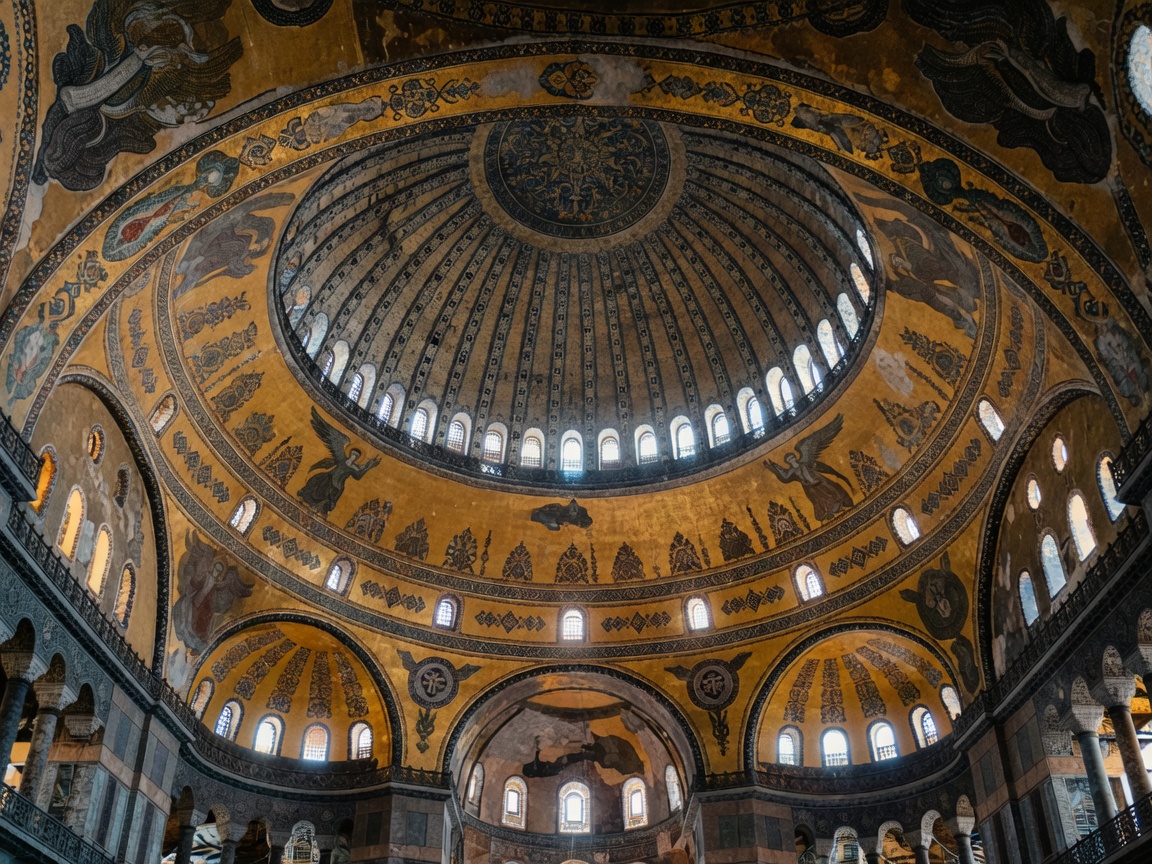
Current Ticketing Structure & Foreign Visitor Regulations
Under regulations enforced by the Republic of Türkiye Ministry of Culture and Tourism and the General Directorate of Foundations, international non-worship visitors enter through a dedicated upper gallery portal on the south facade. This separate entrance ensures quiet access for religious prayers on the ground floor while permitting visitors to examine the Byzantine mosaics up close without interruption.
Essential Visiting Protocol & Dress Codes
Modest attire is strictly enforced: shoulders, knees, and hair (for female travelers) must remain covered. Headscarves are available at the entrance if required. Footwear must be removed or covered prior to entering the sanctuary sectors.
Key Highlights on the Upper Gallery Circuit
Upon ascending the historic stone ramp, visitors will encounter three of the most celebrated surviving mosaics in Christian art history:
- The Deësis Mosaic (13th Century): Depicting Christ Pantocrator flanked by the Virgin Mary and John the Baptist, famous for its emotive realism and soft facial tones.
- The Zoe Mosaic (11th Century): Featuring Empress Zoe and Emperor Constantine IX Monomachos offering monetary tributes to Christ.
- Viking Runic Inscription: Scratched into the marble parapet of the south gallery by Halfdan, an elite Norse warrior of the Byzantine Varangian Guard in the 9th century.
Adjacent Sultanahmet Highlights
Beyond Hagia Sophia, explore the Hippodrome of Constantinople (now Sultanahmet Meydanı), which houses the 3,500-year-old Egyptian Obelisk of Theodosius, the bronze Serpent Column from Delphi, and the Walled Obelisk of Constantine VII. Directly across the square stands the 17th-century Sultan Ahmed Mosque (Blue Mosque), distinguished by its six minarets and 20,000 handmade İznik tiles.